Direct answer: coordinate the machine, water system and counter as one station
A café espresso-machine utilities brief should define the exact machine and group configuration, grinder and accessory equipment, finished counter height and depth, machine footprint and opening zones, water quality target, treatment equipment, water supply, drainage, electrical supply, heat, ventilation, cleaning access, storage, service clearances, installation sequence and commissioning responsibilities. La Marzocco publishes model manuals, designer files and water specifications, demonstrating why a generic coffee machine note is not enough. Dubai Municipality’s Food Code and food-establishment resources provide the local operational reference route. The counter should not enter manufacture until the current equipment information and specialist service design agree.
Freeze the equipment list and barista workflow
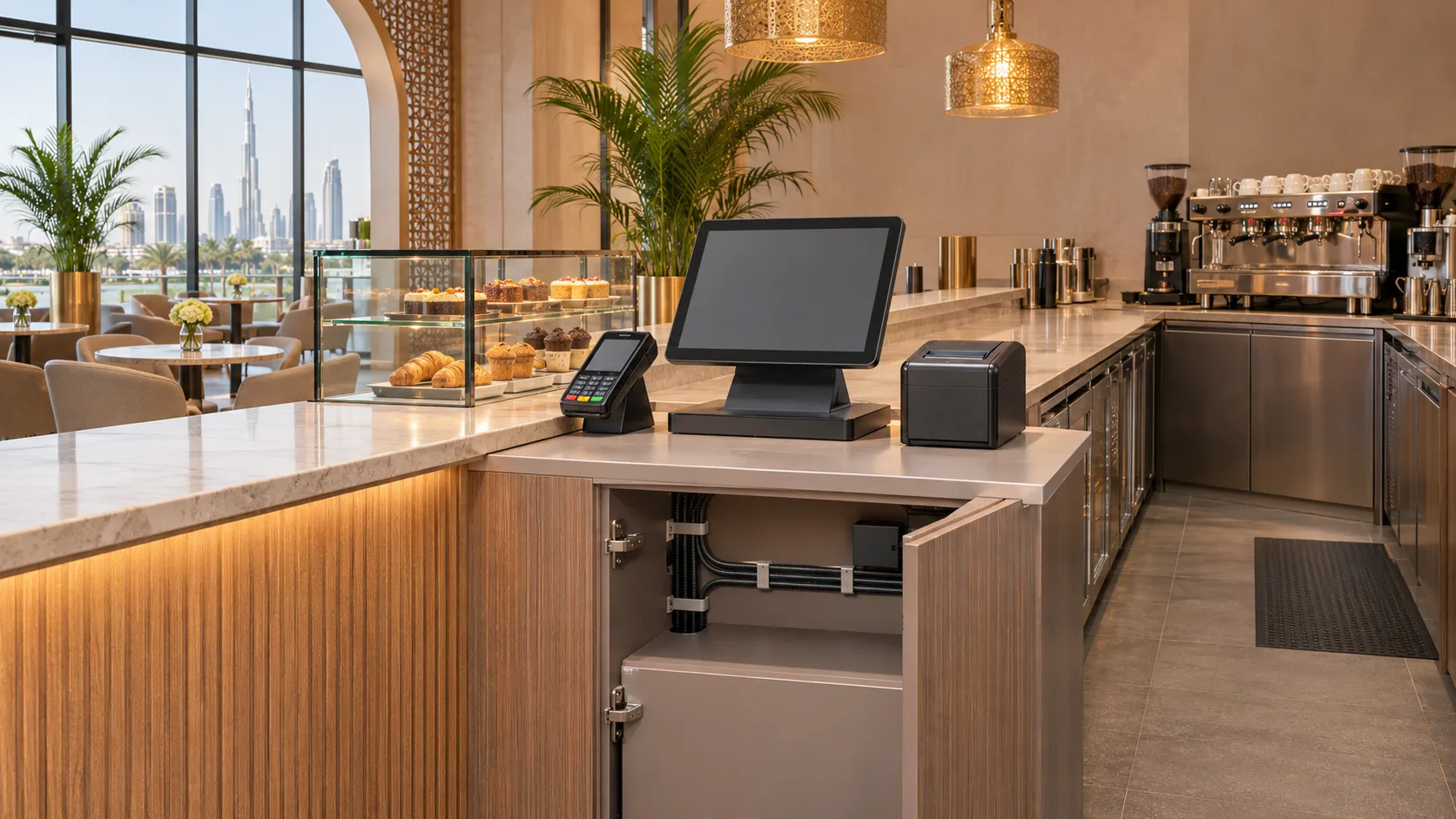
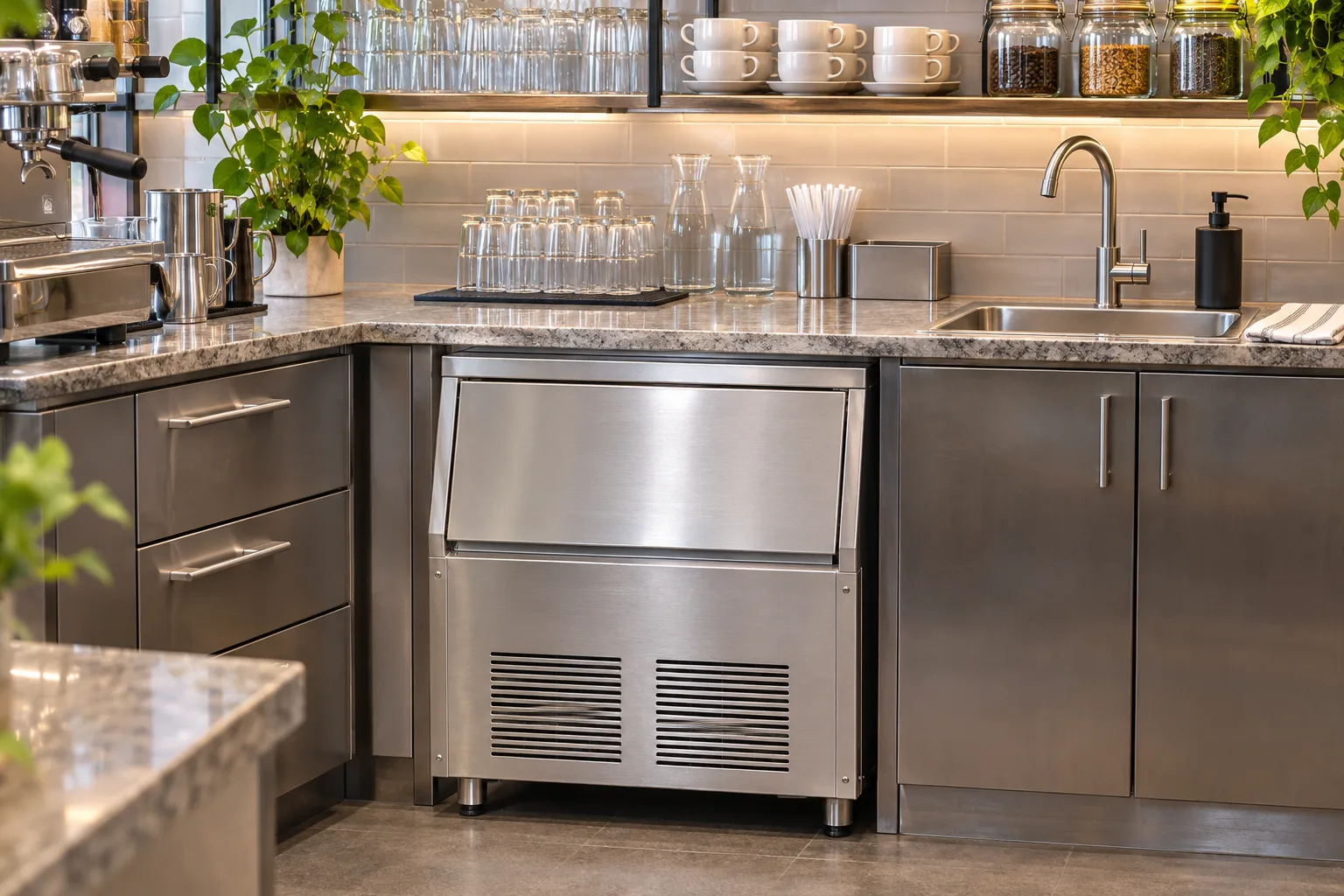
Confirm the espresso machine, number of groups, grinders, batch brewer, hot-water equipment, undercounter refrigeration, ice requirements and point-of-sale devices. Map the sequence from taking an order to grinding, brewing, steaming, rinsing, serving and clearing. The station needs room for cups, milk, knock box, cloths, cleaning products and waste without crossing clean and dirty movements. Record left- or right-handed preferences only as part of an observed workflow, not as a universal rule. The selected equipment drawings should set the real footprints, access zones and connection locations. Test normal service and peak service separately. During a rush, two baristas may share the machine while another person restocks milk, cups or beans. Check that open refrigerator doors, grinder dosing, waste removal and customer collection do not occupy the same narrow point. Record the intended cup volumes and service formats because they affect cup storage, grinder use and milk-handling space. The brief should identify operational decisions that drive the counter rather than asking the fabricator to infer them from equipment symbols.
Treat water as an equipment specification
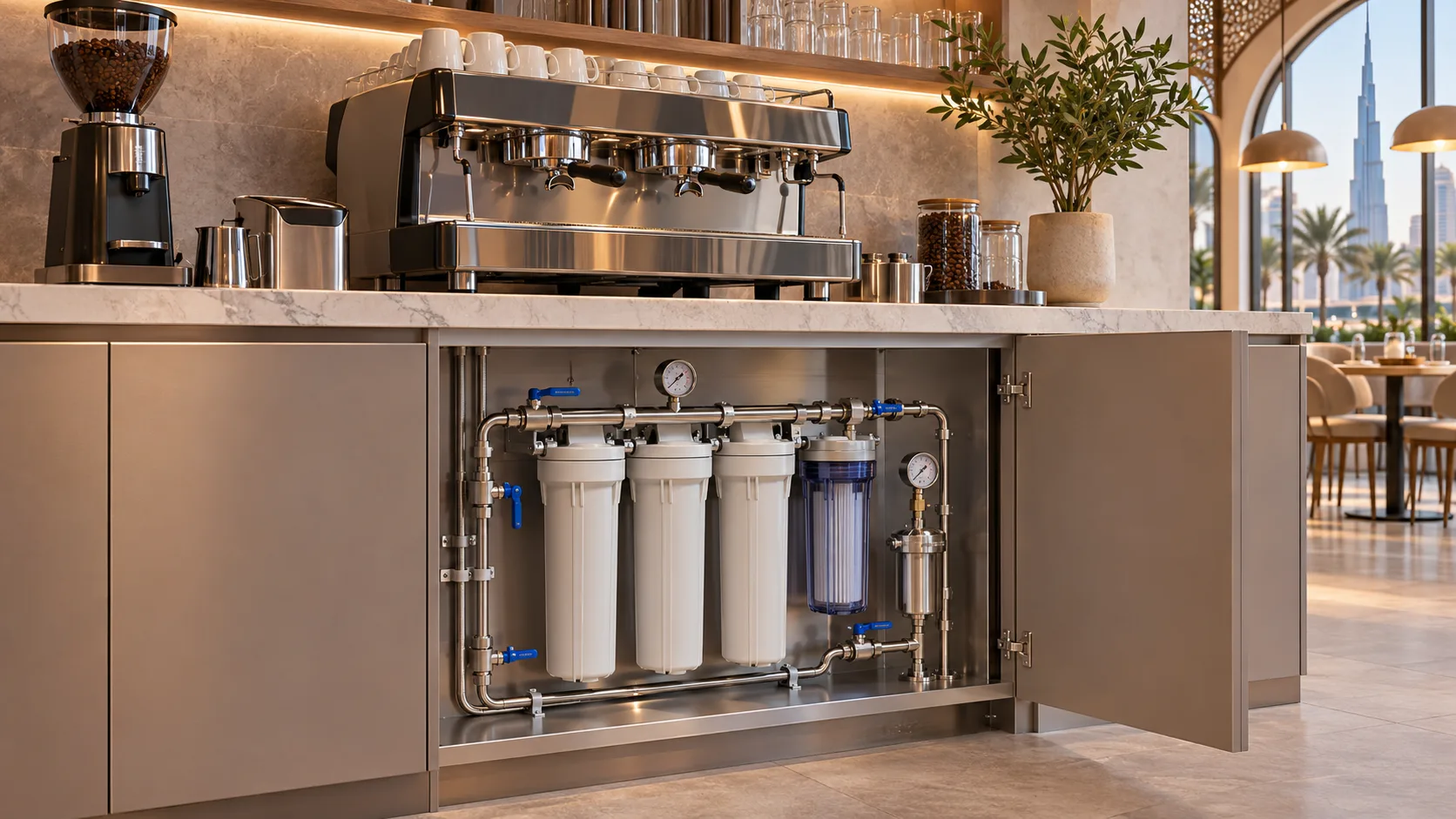
Test the actual incoming water and compare it with the selected machine manufacturer’s current limits. La Marzocco’s technical information publishes water specifications and directs users to suitable treatment. The brief should record who tests the supply, who selects filtration or treatment, where cartridges and bypasses sit, how they are isolated and changed, and how replacement frequency will be managed. Do not assume one filter solves every water condition. The treatment specialist and equipment supplier should confirm the system, while plumbing work remains with qualified professionals following applicable requirements.
Resolve drainage and cleaning before stone is cut
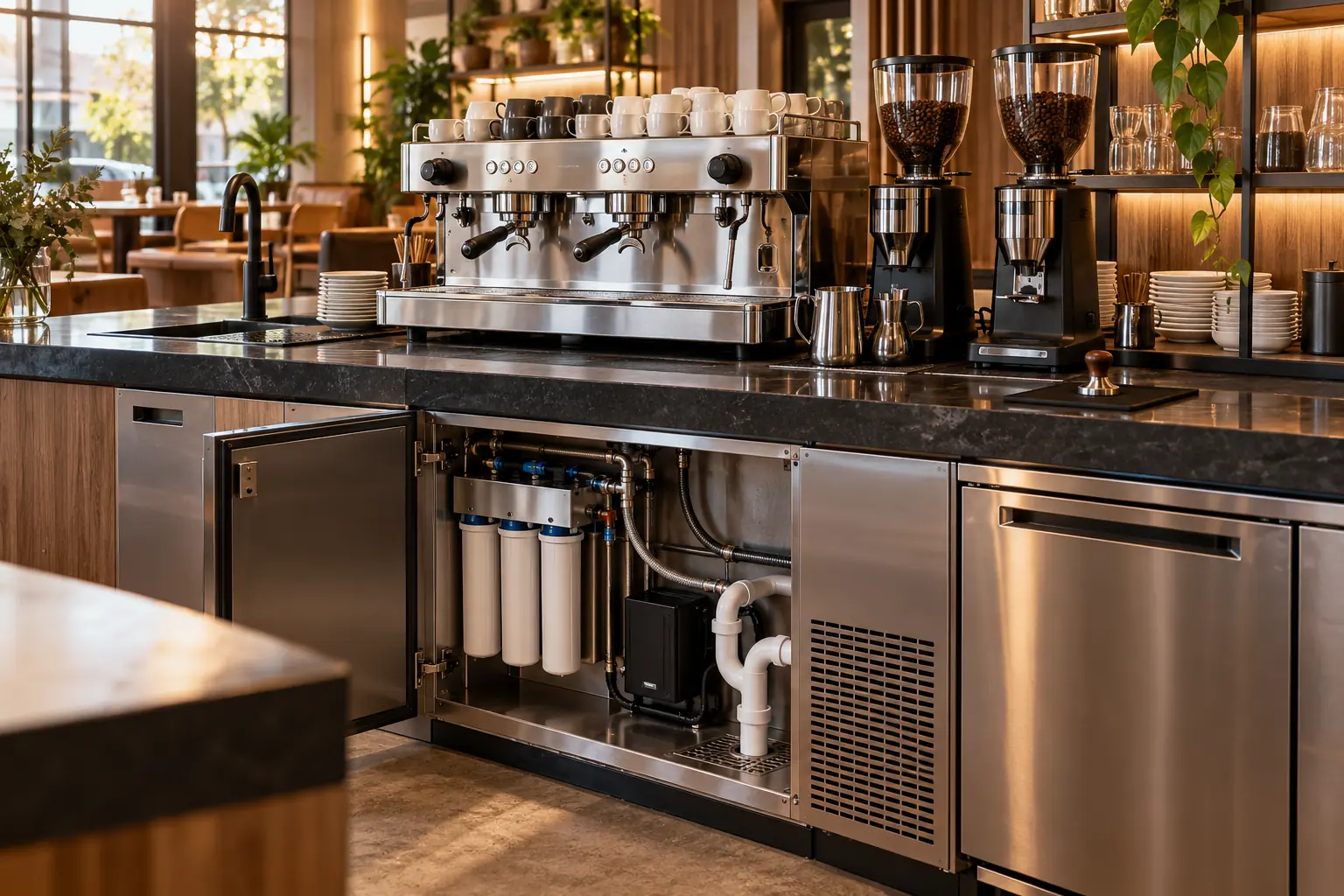
Show the machine drain, drip tray, rinse sink, floor or tundish interfaces and any pump or collection arrangement required by the selected equipment and specialist design. Coordinate continuous falls, accessible traps and cleaning routes without presenting them as DIY instructions. Keep the service bay protected from stored items and allow staff to see and respond to leaks. The counter detail should avoid creating an inaccessible wet cavity beneath the machine. Daily back-flushing and end-of-shift cleaning also need a practical route for water, tools and removable parts, with chemicals stored away from food and drink items.
Coordinate power, heat and equipment isolation
Use the selected model’s current electrical data and assign the circuit, isolator, plug or hardwired arrangement and responsibility to the electrical designer. Include grinders, refrigerators, water-treatment pumps and spare or future equipment rather than looking at the espresso machine alone. Review heat released into the bar and how it affects staff comfort, milk refrigeration and nearby finishes. DEWA publishes the Dubai Building Code incorporating its electrical-installation regulations, but the project’s appointed professionals must determine the applicable design. Keep isolation accessible to authorised staff and away from routine splashing and cleaning.
Preserve service and replacement access
Test how the machine is delivered, lifted onto the counter and removed for major service. Check that technicians can reach panels and connections without dismantling fixed stone or decorative screens. Below the counter, filters, valves, drain components and pumps need sufficient space for inspection and replacement. Label each access panel by purpose in the joinery drawing and keep it free of shelves that will inevitably be filled. Confirm the counter’s structural support and equipment loads through specialist design, especially where cut-outs, cantilevers or heavy stone are proposed.
Planning example
Planning example: a two-group espresso machine is centred on a compact stone counter, with two grinders beside it. The first joinery drawing places a drawer bank directly below and a decorative screen behind the machine. Equipment coordination reveals that the water-treatment cartridges need vertical replacement space, the drain and supply enter the same bay, and a rear panel blocks technician access. The revised brief moves drawers to a dry bay, creates a dedicated removable service panel and updates the stone cut-out from the selected model’s drawing. This is a hypothetical planning example, not a completed café or an installation method.
Counter-release checklist
Complete one interdisciplinary review with the operator, equipment supplier, food-service or kitchen consultant, MEP designers, joiner and stone fabricator before counter manufacture. Keep every substituted model subject to the same check.
- Final machine, grinder and accessory model references approved
- Counter datum, footprint, cut-outs and barista workflow reviewed
- Incoming water tested and treatment responsibility confirmed
- Water, drain, power, isolation and heat interfaces coordinated
- Daily cleaning and chemical-storage needs planned
- Filter, valve, pump and technician access protected
- Delivery, lifting, commissioning and training responsibilities recorded
Limitations and next step
This brief does not design plumbing or electrical systems, certify food-safety compliance, select filtration from a single water reading or replace the current equipment manual. Manufacturer data and local requirements can change, and machine options within one range may have different loads or connections. The next step is to issue a revision-controlled espresso-station interface sheet with the approved equipment documents attached. Close every recorded open item before releasing joinery, stone, services and procurement. After installation, keep water-test results, commissioning records, filter details, serial numbers and maintenance contacts in the operator’s complete handover file.
Sources & further reading
Make this useful for your project.
A review of your property and priorities can turn general guidance into a defined brief.
Explore Cafe fit outDiscuss your project