The direct answer
A café filtration brief should connect incoming water evidence with every outlet the system must serve. Before counter manufacture, settle the water test, appliance manufacturer limits, beverage objectives, peak and daily demand, treatment stages, branch arrangement, bypass or blending strategy, pressure and flow monitoring, cartridge capacity, isolation, drainage where required and service access. Do not choose a cartridge from nominal equipment count alone. The right system is the one sized and configured for the actual water, menu, operating pattern and equipment warranty conditions.
Build an outlet and appliance schedule
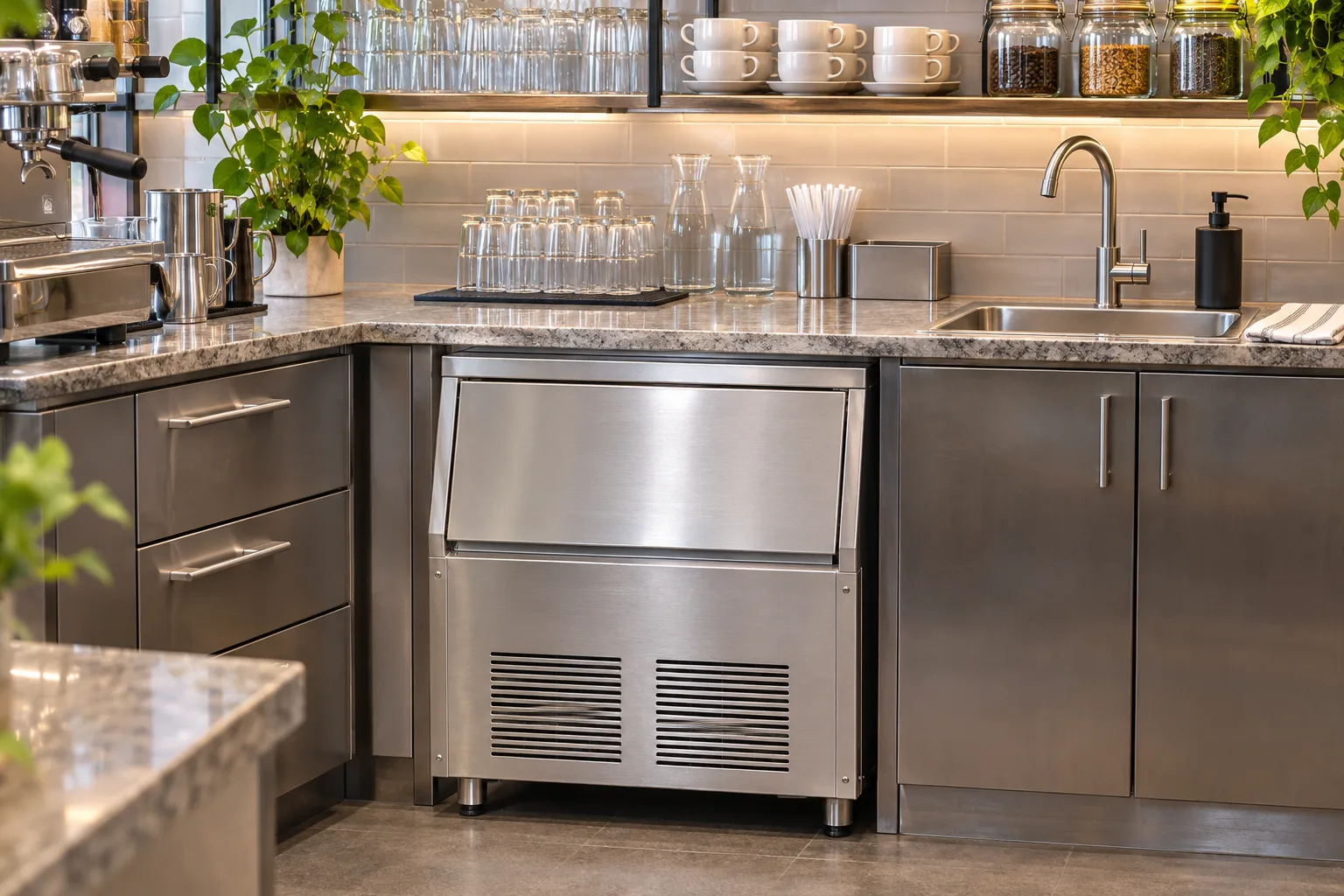
List every demand point: espresso machine, batch brewer, hot-water tower, ice maker, combi or steam equipment, drinking tap and any dishwasher connection being considered. For each, record the manufacturer, model, connection, required flow, operating pressure range, daily volume estimate and published water-quality limits. Mark whether the water becomes an ingredient, protects a heating circuit or is used only for cleaning. This prevents a café from assigning one treatment branch to incompatible duties. If equipment is not selected, use a conservative performance brief and keep the final connection decision open.
- Equipment model and current data sheet
- Water use and peak simultaneous demand
- Required treatment and quality range
- Connection, isolation and drain requirements
Test the incoming water before selecting treatment
Treatment design should start with representative water information, not assumptions about a district or building. Ask the qualified water-treatment specialist which parameters must be tested for the selected equipment and beverages. Common decision inputs can include hardness, alkalinity, dissolved solids, disinfectant residual, turbidity and taste or odour concerns, but the relevant set depends on the system. Confirm whether the sample represents the actual tenant supply after any building-level storage or treatment. Record the test date and method so later changes can be investigated rather than guessed.
Separate taste goals from equipment protection
Coffee and espresso rely on water as an ingredient, while boilers and valves also need protection from scale or corrosion. Pentair’s current foodservice guide publishes different recommended attributes for coffee, espresso, ice and steam applications, demonstrating why one universal target is unsuitable. Use the appliance manufacturer’s warranty and water limits as the controlling technical reference, then balance beverage objectives within that envelope. Do not promise that a particular filter will solve every water issue. Some conditions need different media, membrane treatment, blending or specialist review.
Size for flow, capacity and pressure loss
A system can have adequate total cartridge capacity yet still restrict a busy service if its peak flow or pressure drop is wrong. Create a realistic simultaneous-demand case from the menu and trading pattern. Include clean-filter and end-of-life performance, pipe runs, elevation and the appliance’s minimum inlet condition. Decide where gauges or other monitoring points are useful and what reading should trigger investigation. Capacity calculations should state assumptions about daily litres and operating days. That makes future adjustment possible when the café changes menu, hours or equipment.
Design the cabinet for safe servicing
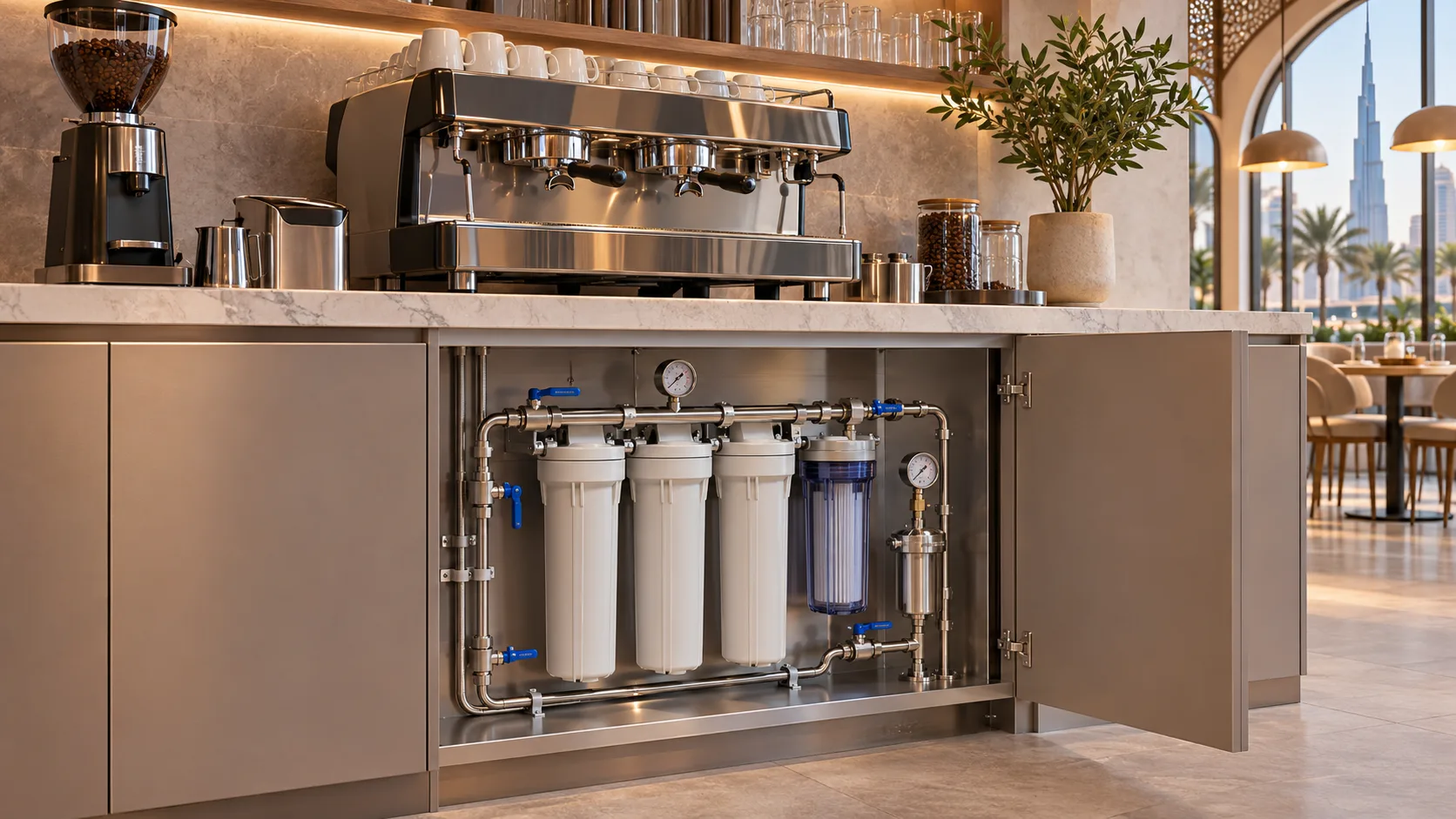
Show the complete assembly inside the counter: filter heads, cartridges, prefilters, treatment vessel if any, valves, gauges, leak management, electrical supply where required and a drain connection only where the selected equipment needs it. Leave enough vertical and forward clearance to remove cartridges without dismantling shelves or lying beneath live equipment. Keep stock away from the service zone. The cabinet material and base should tolerate normal servicing conditions, and any electrical accessories must be coordinated away from water exposure in accordance with applicable requirements. Installation belongs with competent specialists.
Planning example
Planning example: a café plans a two-group espresso machine, a batch brewer, an ice maker and a drinking-water tap. The initial counter drawing shows one small cartridge feeding all four. The equipment schedule reveals different peak demands and water-quality guidance, while the drinking tap is expected to run during the morning coffee peak. The team obtains an incoming-water test and asks the treatment specialist to compare a shared prefiltration stage with separate coffee and ice or drinking branches. The revised cabinet reserves accessible cartridge clearance, gauges and isolation for each branch before joinery is released.
Buyer checklist before manufacture
A useful approval pack combines evidence, sizing and maintenance information.
- Incoming-water test and sample point recorded
- All outlets and appliance limits scheduled
- Treatment stages and branch diagram agreed
- Peak flow, daily volume and pressure loss checked
- Bypass or blending purpose and settings defined
- Cartridge codes, capacity and removal clearances shown
- Isolation, monitoring, leak response and drains coordinated
- Commissioning readings and replacement record specified
Limitations and next step
This article does not design a potable-water system or select treatment media for a specific café. Water conditions, equipment requirements and local approvals can change, and food-establishment requirements depend on the activity. The next step is to issue the current equipment schedule and a representative water test to a qualified treatment specialist, then coordinate the resulting schematic with the café designer, plumber, equipment supplier and counter fabricator. Release the counter only after the service zone, removal clearances and commissioning information are visible on the approved drawings.
Sources & further reading
Make this useful for your project.
A review of your property and priorities can turn general guidance into a defined brief.
Explore Cafe fit outDiscuss your project