Start with the right questions
A commercial fit-out proposal should explain what will be delivered, who provides the information and how the space becomes ready for occupation. A single area rate cannot answer those questions.
- Record the existing shell and services condition.
- Separate landlord provisions from tenant works.
- Identify design, equipment and specialist supplier interfaces.
Plan for the operating business
A restaurant, a salon and a workplace have different operational requirements. Include the equipment list, storage, staff routes and maintenance needs in the brief. Ask for a responsibility schedule covering design information, submissions, procurement, installation and handover, with unresolved items clearly recorded.
What to ask for
Before agreeing the next stage, request the following information in a form you can review with your project team.
- An itemised work package schedule
- An equipment and services responsibility matrix
- A handover list agreed before construction
Describe the business activity before the finishes
Record how customers, staff, goods and equipment move through the premises. Include opening and closing routines, deliveries, storage and activities that need privacy or separation. These requirements influence the layout and technical brief. A list of finishes cannot establish whether the space supports the business. Ask the operator to review the brief with the design team so that the fit-out responds to the intended operation rather than an attractive but incomplete floor plan.
Draw the boundary between landlord and tenant work
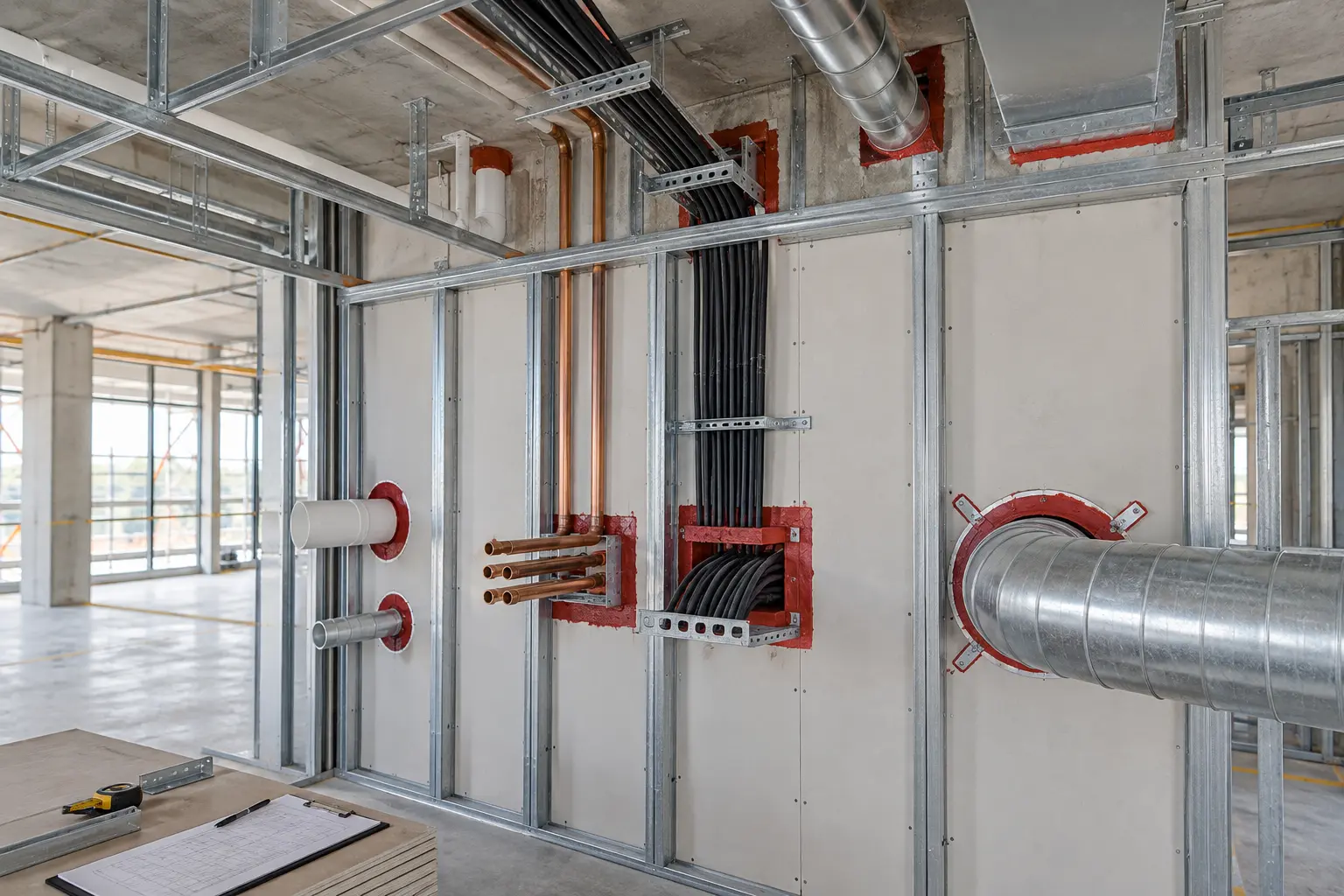
Collect available information about the shell, retained systems and landlord provisions, then identify what the tenant scope must add or modify. Mark information that requires verification. For DDA-regulated projects, the authority publishes its own fit-out permit process and document requirements; other properties may follow different routes. Confirm the applicable process with the appointed team. Do not assume building permission alone resolves every authority or specialist requirement for the proposed use.
Planning example: a shell unit with owner-supplied equipment
Imagine a tenant supplies specialist equipment while a contractor carries out the surrounding fit-out. The scope needs to identify who provides equipment information, who designs connections, who prepares the location and who commissions the equipment. If those tasks are absent from both appointments, the opening programme contains a gap even though the equipment and construction have each been ordered. Review the interfaces before procurement so responsibility is assigned explicitly.
Include the work surrounding the visible installation
Ask proposals to identify protection, delivery, removal, temporary arrangements, making good and the relevant completion records. These tasks are easily overlooked when a comparison focuses on furniture and finishes. Distinguish confirmed quantities from allowances and investigations. Link specialist packages to the current drawings and equipment schedule. A clear scope should allow a reviewer to understand both the intended result and the work needed to reach it without guessing at hidden exclusions.
Review completion against operational needs
Define the evidence required to accept each package and the demonstrations needed by the operator. Keep construction completion, authority processes and business opening preparations distinguishable. Staff training, stock delivery and business systems may sit outside the contractor's scope but still affect readiness. Give those tasks owners and dates in the wider plan. The scope review becomes useful when it connects the physical premises to a realistic and properly coordinated transition into use.
Bring the brief to a specialist
Share your location, current photographs, approximate dimensions and priorities. A scoped review can then identify the information needed for a useful proposal. Product choices, project dates and final prices should follow the actual property and agreed specification.
Sources & further reading
Make this useful for your project.
A review of your property and priorities can turn general guidance into a defined brief.
Explore Shell and core fit outDiscuss your project